
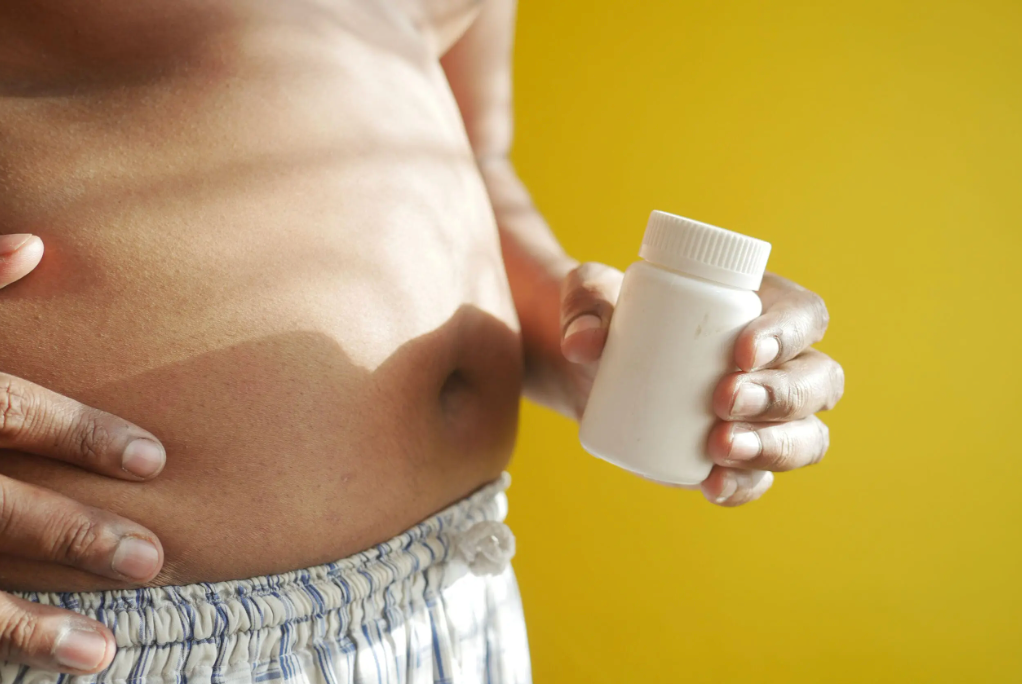
Fat burners are the most purchased supplement category in the weight loss market and, arguably, the most misrepresented. The claims range from modest to absurd. The mechanisms range from well-documented to completely fabricated. Knowing which ingredients fall into which category requires looking at the actual research, not the label copy.
Here is the evidence-based answer to whether fat burners work, what they realistically deliver, and how to use them without wasting money or compromising health.
What Fat Burners Are Actually Doing
The term "fat burner" covers a broad category of supplements that work through one or more of four mechanisms: increasing metabolic rate (thermogenesis), increasing fat oxidation, suppressing appetite, or reducing fat absorption. A product can legitimately belong to this category if it produces a measurable effect on any of these variables. The question is always how large that effect is, whether it persists over time, and whether the effect size justifies the cost.
The most important framing: fat burners operate within a caloric deficit. They do not create the deficit by themselves. A thermogenic supplement that increases metabolic rate by 4 to 5% adds roughly 80 to 100 extra calories burned per day for an average adult. That is meaningful on a per-week basis over several months, but it is not going to outrun a diet that is 500 calories over maintenance. Fat burners sharpen the edge of a plan that is already working. They are not the plan itself.
Caffeine: The Mechanism That Actually Holds Up
Caffeine is the most evidence-supported ingredient in the fat burner category by a significant margin. It produces documented effects on multiple fat loss pathways simultaneously: it increases resting metabolic rate, enhances fat oxidation during exercise, and reduces perceived exertion, allowing higher training output.
A 2020 meta-analysis in Critical Reviews in Food Science and Nutrition examining 13 randomized controlled trials found that caffeine supplementation produced statistically significant reductions in body weight, body mass index, and body fat percentage compared to placebo. The effect was dose-dependent, with greater fat loss outcomes at higher caffeine doses, and was most pronounced in studies exceeding 8 weeks of consistent use.
The metabolic rate increase from caffeine is well quantified. A 1989 study in the American Journal of Clinical Nutrition found that 100 mg of caffeine increased metabolic rate by approximately 3 to 4% over 150 minutes, with larger doses producing proportionally greater effects. At 400 mg, the metabolic rate increase approaches 8 to 10% in non-habituated users.
The fat oxidation benefit is distinct from the metabolic rate effect. Caffeine stimulates the release of epinephrine, which signals adipose tissue to release stored fatty acids into circulation via lipolysis. During exercise, those circulating fatty acids are available as fuel. The net result is a greater proportion of energy derived from fat oxidation during aerobic activity. A 1994 study in the International Journal of Obesity found that caffeine increased fat oxidation rates during exercise by approximately 30% compared to placebo.
Tolerance develops with consistent use. The metabolic rate effect attenuates significantly within 1 to 2 weeks of daily caffeine exposure at a fixed dose. This is why cycling, taking planned breaks of 7 to 14 days, preserves acute sensitivity and maintains the thermogenic benefit over longer fat loss phases.
Green Tea Extract and EGCG: The Supporting Evidence
Green tea extract is the second most well-documented fat loss ingredient in the research literature. Its active compound, epigallocatechin gallate (EGCG), inhibits catechol-O-methyltransferase, an enzyme that breaks down norepinephrine. By slowing norepinephrine breakdown, EGCG prolongs its fat-mobilizing signal, essentially extending the lipolytic effect that caffeine initiates.
A 2011 meta-analysis in Obesity Reviews examining 15 randomized controlled trials found that green tea catechins combined with caffeine produced significantly greater fat loss than caffeine alone, with an average additional reduction of approximately 1.2 kg over 12-week periods. When consumed without caffeine, green tea catechins produced a smaller but still statistically significant fat loss benefit.
The effective dose of EGCG used in most positive trials was 270 to 600 mg per day, which requires a concentrated green tea extract rather than brewed green tea at typical consumption levels. Many commercial fat burners include green tea extract at doses below this threshold. Again, reading the label for the specific milligram amount rather than just confirming the ingredient is present matters.
Thermogenic Blends: Where the Evidence Gets Thinner
Commercial thermogenic fat burners typically combine caffeine and green tea with several additional ingredients: synephrine (bitter orange extract), capsaicin, yohimbine, and various proprietary blends of plant extracts. The evidence quality for these additional ingredients varies substantially.
Synephrine, an adrenergic amine from bitter orange, has a similar mechanism to ephedrine (which was banned from supplements in 2004) but a weaker stimulatory effect. A 2011 review in the International Journal of Medicinal Sciences found that synephrine modestly increased resting metabolic rate and fat oxidation in short-term studies, with the effect enhanced when combined with caffeine. The effect size is smaller than caffeine alone, and long-term human data is limited.
Capsaicin from cayenne pepper has a documented acute thermogenic effect. A 2012 meta-analysis in Appetite found that capsaicin consumption produced a modest increase in energy expenditure of approximately 50 calories per day and a small reduction in appetite. The effect was real but attenuated rapidly with repeated exposure as desensitization of TRPV1 receptors occurs. It is a marginal contributor at best.
Yohimbine, derived from the bark of the African Yohimbe tree, acts as an alpha-2 adrenergic receptor antagonist. Alpha-2 receptors in fat cells normally inhibit lipolysis. Blocking them allows greater fat mobilization, particularly in stubborn subcutaneous fat areas. A 2006 study in Research in Sports Medicine found that yohimbine supplementation at 20 mg per day combined with exercise produced significantly greater fat loss in soccer players compared to placebo over 21 days. The catch: yohimbine produces significant side effects at higher doses, including anxiety, elevated blood pressure, and heart rate irregularities. It should not be combined with stimulant-heavy pre-workouts or consumed by individuals with cardiovascular conditions.
Appetite Suppressants: Satiety Over Thermogenesis
Some fat burners work primarily through appetite suppression rather than metabolic acceleration. The most evidence-backed ingredient in this subcategory is glucomannan, a soluble fiber derived from konjac root.
A 2005 randomized controlled trial in the International Journal of Obesity found that glucomannan supplementation at 1 gram taken 30 minutes before three daily meals produced an average of 5.5 pounds of weight loss over 8 weeks without any dietary changes in overweight adults. The mechanism is purely physical: glucomannan absorbs water and expands in the stomach, increasing gastric volume and generating satiety signals that reduce subsequent food intake.
Protein's appetite-suppressing effect also belongs in this category. High protein intake reduces ghrelin, the primary hunger hormone, and increases peptide YY and GLP-1, hormones that signal satiety. The effect is consistent, dose-dependent, and persists across multiple meals. From a fat loss standpoint, ensuring protein at 1.6 to 2.0 grams per kilogram of bodyweight produces appetite management that competes favorably with most commercial appetite suppressant supplements. Pairing adequate protein with a structured fat loss plan through the weight loss collection at Rock's Discount often achieves better results than a stimulant-heavy fat burner taken without addressing protein intake.
What Does Not Work: The Ingredients to Ignore
Raspberry ketones were heavily marketed following media coverage in the early 2010s. The human evidence for raspberry ketones producing fat loss is essentially nonexistent. The animal studies that generated interest used doses that would be impossible to achieve through supplementation in humans. No controlled human trial has demonstrated meaningful fat loss from raspberry ketone supplementation.
Garcinia cambogia, containing hydroxy citric acid (HCA), was widely promoted as a fat loss ingredient. A 1998 double-blind placebo-controlled trial in the Journal of the American Medical Association found no significant difference in fat loss between garcinia cambogia and placebo in overweight adults. A 2011 meta-analysis of 12 randomized controlled trials reached the same conclusion: the weight loss associated with HCA is statistically significant but so small as to be clinically irrelevant.
Proprietary blends listing 15 or more ingredients in a combined milligram total without disclosing individual amounts are the most reliable sign that a product is trading on complexity rather than efficacy. More ingredients listed is not a signal of greater effectiveness. It is often a signal that no individual ingredient is present at an effective dose.
How to Use Fat Burners Without Undermining Results
Cycling is legitimate and evidence-consistent for stimulant-based fat burners. Four to six weeks on, one to two weeks off, restarting at a lower dose, is the protocol most consistent with tolerance management and maintained effectiveness over a longer fat loss phase. This is especially important for caffeine, where metabolic adaptation is well documented.
Starting at a lower dose than the label maximum allows you to assess individual tolerance and preserve dose escalation for later in the cycle when baseline sensitivity has adjusted. For anyone sensitive to stimulants or training in the evening, a stimulant-free fat burner containing glucomannan, CLA, and green tea extract without additional caffeine sources avoids the sleep disruption that undermines fat loss progress from the recovery side.
Protein intake during a fat loss phase should be non-negotiable regardless of what fat burner you are using. The lean mass preservation data consistently shows that inadequate protein during a caloric deficit accelerates muscle loss. Losing muscle slows metabolic rate and worsens body composition outcomes independent of scale weight. Using the macro calculator at Rock's Discount to confirm your protein and calorie targets before adding a fat burner to your stack is the correct sequence. Address the nutrition foundation first, then optimize with supplementation.
The Realistic Outcome Expectation
The research-supported contribution of the most effective fat burner ingredients, caffeine at an effective dose combined with green tea EGCG, is approximately 100 to 200 additional calories burned per day over baseline across a 6 to 8 week period before tolerance adjustment. Over 8 weeks, that represents 5,600 to 11,200 additional calories expended, which translates to roughly 0.7 to 1.4 kg of additional fat loss above what the caloric deficit alone would produce.
That is a real, meaningful contribution, not a dramatic transformation. In the context of a structured fat loss phase where total fat loss over 12 weeks might be 3 to 6 kg, fat burner supplementation can account for 15 to 25% of that outcome. The remaining 75 to 85% comes from the caloric deficit, the protein intake, the training, and the consistency.
Anyone expecting fat burners to produce transformation on a poor diet will be disappointed. Anyone using them as a calibrated tool on top of an already functional plan will see measurable acceleration. That is the honest answer, and it is the only one supported by the evidence.
For a direct recommendation on which specific product fits your training schedule, caffeine sensitivity, and fat loss phase timeline, stop by any Rock's Discount Vitamins location for a conversation grounded in what the research actually supports rather than what the label promises.
The Bottom Line
Fat burners work. The best ingredients caffeine, EGCG, yohimbine, glucomannan, have replicated evidence behind them and produce measurable fat loss contributions in the range of 0.7 to 1.5 kg of additional fat over 6 to 12-week periods. They are additive tools, not primary drivers. The plan drives the result. The supplement sharpens it.
Know the mechanism. Confirm the dose. Cycle intelligently. Protect the protein. That is the entire protocol the evidence supports.