
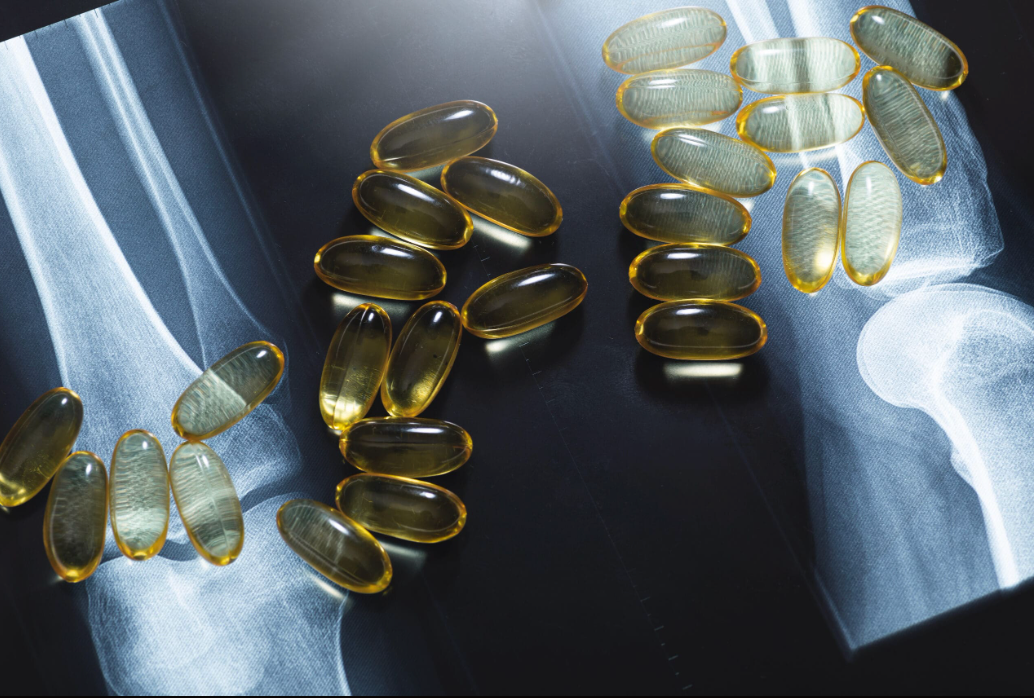
Forty percent of American adults are vitamin D deficient. That number climbs to 95% when you include people who are insufficient, meaning they have enough to avoid clinical deficiency but not enough to support optimal physiological function. This is not a niche health problem. It is one of the most prevalent and most consequential nutritional gaps in the country, and most people have no idea it is affecting them.
Here is what vitamin D actually does, what deficiency costs you, and what the research says about fixing it.
Why Vitamin D Is Different From Other Vitamins
Vitamin D is technically a hormone precursor, not a classic vitamin. When ultraviolet B radiation from sunlight hits the skin, 7-dehydrocholesterol is converted to previtamin D3, which the liver converts to 25-hydroxyvitamin D, and the kidneys further activate to 1,25-dihydroxyvitamin D3, the biologically active form. This active form binds to vitamin D receptors expressed on virtually every cell type in the body, including immune cells, muscle cells, bone-forming osteoblasts, and neurons.
That receptor distribution is the reason vitamin D deficiency has consequences across so many systems simultaneously. It is not one nutrient doing one job. It is a system-wide regulatory hormone that is absent in 95% of the population.
Bone Health: The Calcium Absorption Problem
The bone health connection to vitamin D is the most widely known and the most mechanistically direct. Vitamin D is essential for calcium absorption in the small intestine. Without adequate vitamin D, only 10 to 15% of dietary calcium is absorbed. With sufficient vitamin D, that absorption rate rises to 30 to 40%.
The clinical consequences of sustained vitamin D and calcium malabsorption are well documented. In children, severe deficiency causes rickets, the softening and weakening of developing bone tissue. In adults, deficiency causes osteomalacia, a painful softening of existing bone. In older adults, chronic deficiency is a major driver of osteoporosis, with vitamin D deficiency increasing fracture risk by up to 30% according to a 2009 meta-analysis in the New England Journal of Medicine.
This is not a concern only for elderly populations. Bone density peaks in the mid-20s and begins declining in the early 30s. The vitamin D status during those building years directly determines the density ceiling from which that decline starts. Athletes who train hard and eat protein but neglect micronutrient status are often building muscle on a bone foundation that is quietly degrading.
The evidence-supported target for serum 25-hydroxyvitamin D is 40 to 60 ng/mL. Below 20 ng/mL is clinical deficiency. Between 20 and 30 ng/mL is insufficient. Most Americans without supplementation sit between 15 and 25 ng/mL.
Immune Function: The Research Is Stronger Than Most People Know
The 2017 meta-analysis in the BMJ is the most cited modern study on vitamin D and immune function. It pooled data from 25 randomized controlled trials covering 11,321 participants and found that vitamin D supplementation significantly reduced the risk of acute respiratory tract infections. In participants who were severely deficient at baseline, the risk reduction was 70%. In those with adequate baseline levels, the protective benefit was smaller but still statistically significant.
The mechanism involves two distinct immune pathways. First, vitamin D stimulates the production of antimicrobial peptides, specifically cathelicidin and beta-defensin 2, in macrophages and epithelial cells. These peptides directly disrupt the membranes of bacteria and viruses before they can establish infection. Second, vitamin D modulates the inflammatory cytokine response, reducing the risk of the excessive inflammatory reaction that causes the majority of tissue damage in severe respiratory infections.
Vitamin D receptors are expressed on T cells, B cells, natural killer cells, and dendritic cells. When vitamin D is deficient, these cells cannot fully activate. The immune system is still operational, but its capacity for both pathogen recognition and coordinated response is measurably reduced. Correcting the deficiency restores full receptor signaling across all of these cell types.
For anyone serious about year-round immune resilience, vitamin D status is the highest priority micronutrient to address before anything else. The general health and wellness collection at Rock's Discount carries vitamin D3 options in multiple doses, which is the form most consistent with what your skin produces from sunlight and the form used in virtually all the positive clinical research.
Muscle Function: The Performance Variable Nobody Talks About
Vitamin D has a direct effect on skeletal muscle function that is underappreciated in most nutrition discussions but well established in the literature. Vitamin D receptors in muscle tissue regulate muscle protein synthesis and muscle fiber development, particularly type II fast-twitch fibers, which are the primary fibers recruited during resistance training.
A 2014 randomized controlled trial in the European Journal of Preventive Cardiology found that vitamin D supplementation at 4,000 IU per day over 12 weeks improved cardiovascular performance markers and reduced inflammatory cytokines that impair muscle recovery. A 2021 review in the Journal of Strength and Conditioning Research confirmed that correcting vitamin D deficiency in resistance-trained athletes produced significant improvements in strength output and lean mass, with the mechanism attributed to improved muscle protein synthesis signaling through the vitamin D receptor pathway.
Athletes who are vitamin D deficient and training seriously are operating with a measurable suppression on both their immune response to training stress and their muscle adaptation capacity. This is why vitamin D supplementation is relevant not just for general health but specifically for anyone running a structured training program.
The Sunlight Problem and Why Supplementation Is Necessary
The theoretical solution to vitamin D deficiency is sun exposure. The practical reality is that meaningful vitamin D synthesis from sunlight requires exposing large skin surface areas to UVB radiation during peak hours (10am to 3pm), without sunscreen, for 15 to 30 minutes depending on skin tone and latitude. Above 37 degrees north latitude, which covers roughly the northern two-thirds of the United States, UVB intensity is insufficient to drive meaningful vitamin D synthesis from October through March regardless of time spent outdoors.
Darker skin pigmentation reduces UVB conversion efficiency by 90 to 99%, meaning individuals with higher melanin concentrations need significantly more sun exposure to produce equivalent vitamin D to lighter-skinned individuals. Indoor work, sunscreen use, and clothing further reduce synthesis.
The dietary vitamin D situation is equally limited. Fatty fish (salmon, mackerel, sardines) contain meaningful amounts. Fortified dairy and egg yolks contain modest amounts. For most people eating a typical Western diet, food alone cannot close the gap to optimal serum levels. Supplementation is not optional for the vast majority of adults who want to achieve the 40 to 60 ng/mL target associated with optimal bone and immune outcomes.
The effective supplemental dose for most deficient adults is 2,000 to 4,000 IU of vitamin D3 per day. Blood testing (serum 25-hydroxyvitamin D) is the only way to confirm your actual status and calibrate the dose appropriately. Retesting after 8 to 12 weeks of supplementation confirms whether the dose is sufficient to reach the target range. If you want help identifying the right product and dose for your situation, the team at any Rock's Discount Vitamins location can walk you through options based on your health goals.
What Optimal Vitamin D Status Actually Produces
The research picture across bone health, immune function, and muscle performance converges on the same conclusion: getting vitamin D status from deficient to optimal produces measurable, multi-system improvements that no other single supplement intervention can replicate at equivalent cost.
Fracture risk decreases. Infection susceptibility decreases. Muscle protein synthesis signaling improves. Inflammatory cytokine balance shifts toward recovery-supportive rather than chronically elevated. Cognitive function research suggests slower age-related decline at optimal vitamin D status. Multiple sclerosis risk is significantly lower in populations with higher vitamin D levels.
All of this from one nutrient that 95% of the population is not getting enough of.
Test your levels. Supplement with D3 at the dose needed to reach 40 to 60 ng/mL. Retest in 12 weeks. That is the complete protocol. It is inexpensive, well-researched, and has one of the most favorable benefit-to-cost ratios of any health intervention available. If you want to pair vitamin D with a comprehensive micronutrient foundation, the general health and wellness collection is the right starting point to see what is available without overcomplicating the stack.
The Bottom Line
Vitamin D deficiency is not rare. It is the default state for most Americans, and it costs them in bone density, immune resilience, and muscle function simultaneously. The fix is simple, inexpensive, and supported by some of the strongest micronutrient research in clinical nutrition. Get tested, supplement accordingly, and stop leaving this foundational variable unaddressed.