
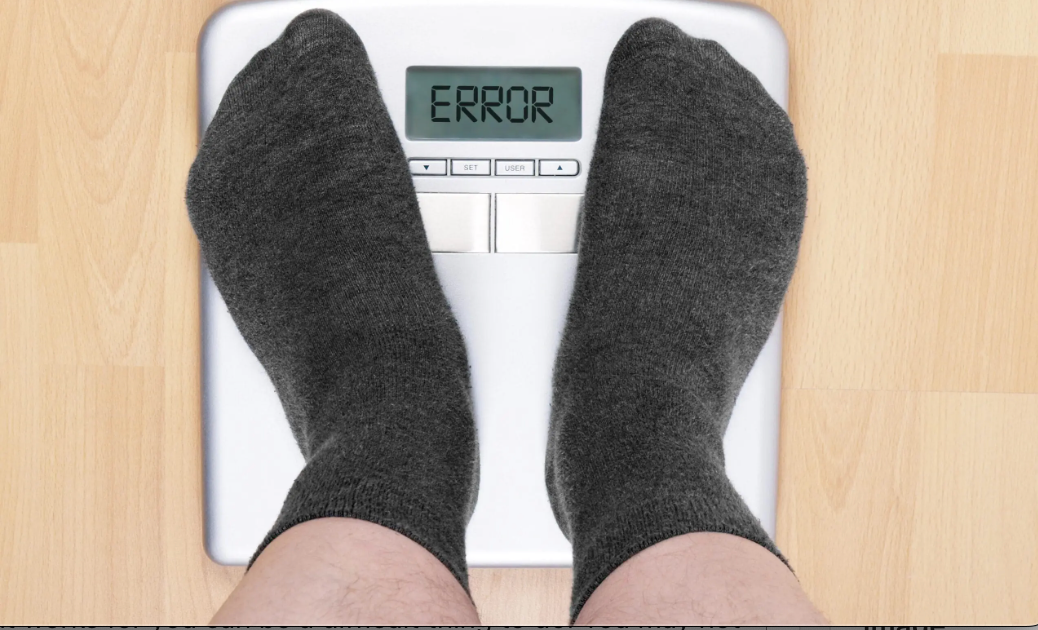
Most weight loss plans work in the first four to eight weeks. Then they stop. The scale stalls, motivation drops, and the narrative shifts to slow metabolism or bad genetics. The research tells a different story. The vast majority of weight loss plateaus are caused by a small set of specific, identifiable, and correctable errors. None of them are mysterious. All of them are documented.
Here is what the evidence actually shows about why fat loss stalls and how to fix each cause.
Mistake 1: Trusting the Scale as the Primary Progress Metric
Daily scale weight is one of the least reliable short-term indicators of fat loss progress, yet it is the primary metric most people use to judge whether their program is working. The research on biological weight fluctuation makes the problem clear.
A 2017 study in the Journal of Obesity using continuous weight monitoring in 25 individuals found that daily body weight fluctuated by an average of 1.0 to 1.5 kg within a single week, with some individuals showing swings of up to 2.5 kg based solely on hydration status, sodium intake, gastrointestinal contents, and hormonal factors unrelated to fat mass. Women show additional cyclical fluctuation of 1 to 3 kg across the menstrual cycle due to estrogen-driven water retention in the luteal phase.
The practical consequence: a person losing fat at the biologically appropriate rate of 0.5 to 1 kg per week can step on the scale on any given morning and see a number that is higher than the previous week, despite being in an ongoing caloric deficit and losing fat tissue. If that daily number is the primary feedback signal, the correct behavioral response is incorrectly identified as failure, which leads to unnecessary program changes or abandonment of a plan that is actually working.
The fix is measurement methodology, not program change. Weekly average weight rather than daily readings smooths out acute fluctuations and reveals the actual trend. Taking the average of seven consecutive daily weigh-ins, measured under consistent conditions (morning, post-bathroom, before eating), removes most of the signal noise. Progress photos at 4-week intervals and body circumference measurements at the waist, hips, and thigh capture compositional changes that scale weight misses entirely when fat loss and muscle gain are occurring simultaneously.
Mistake 2: Inadequate Protein Intake During a Caloric Deficit
The single most consistent finding across weight loss research is that protein intake determines how much of the weight lost is fat versus lean mass. Most people in a caloric deficit are eating far less protein than the evidence supports, and the body composition consequences are significant and compounding.
A 2012 randomized controlled trial in the Federation of American Societies for Experimental Biology Journal directly compared high-protein versus normal-protein diets during an identical caloric deficit in resistance-trained adults. The high-protein group consuming 2.4 grams per kilogram of bodyweight per day lost significantly more fat mass and gained lean mass over the 4-week period compared to the group consuming 1.2 g/kg/day, despite identical caloric intake. The high-protein group experienced body recomposition. The normal-protein group experienced conventional weight loss with accompanying lean mass reduction.
The mechanism is straightforward: during a caloric deficit, the body increases protein catabolism to meet gluconeogenic demand. Higher dietary protein intake provides more substrate for this process without requiring the breakdown of skeletal muscle tissue. Additionally, protein has the highest thermic effect of any macronutrient at 20 to 35% of its caloric content, meaning more protein in the diet increases daily caloric expenditure without changing food volume.
The evidence-supported protein target during active fat loss is 1.8 to 2.7 grams per kilogram of bodyweight per day. For a 160-pound (73 kg) individual, that is 131 to 197 grams of protein daily. Most people eating a standard Western diet in a caloric deficit without specific protein targeting consume roughly 80 to 100 grams, leaving a significant gap that directly limits fat loss quality and lean mass preservation.
Mistake 3: Cutting Calories Too Aggressively
An aggressive caloric deficit feels like the fastest route to fat loss. The research consistently shows it produces the opposite of the intended outcome over any time horizon longer than two to three weeks.
A 2010 study in the American Journal of Clinical Nutrition found that individuals on very low-calorie diets of 800 calories per day experienced a reduction in resting metabolic rate of approximately 400 calories per day within 4 weeks, compared to an 80-calorie reduction in the moderate deficit group eating 1,200 calories. The severe deficit group lost weight faster initially but experienced a metabolic adaptation that largely negated the deficit advantage within weeks, and they lost significantly more lean mass in the process.
The metabolic adaptation phenomenon involves reductions in thyroid hormone output, leptin signaling, sympathetic nervous system activity, and unconscious NEAT reduction, all occurring simultaneously in response to a large caloric deficit. The body interprets aggressive caloric restriction as a survival threat and responds by reducing energy expenditure across multiple systems simultaneously.
The evidence-supported deficit range for sustainable fat loss without significant metabolic adaptation or lean mass loss is 300 to 500 calories below Total Daily Energy Expenditure. This produces a fat loss rate of approximately 0.3 to 0.5 kg per week, which feels slower than aggressive cutting but produces superior body composition outcomes over 12 to 24 week periods because lean mass is preserved, metabolic rate remains higher, and adherence is substantially better. Establishing your actual TDEE using a personalized calculator rather than a generic guideline is the necessary starting point. The macro calculator at Rock's Discount generates individual targets based on your bodyweight, activity level, and goals, which is meaningfully more accurate than applying population average numbers.
Mistake 4: Ignoring Metabolic Adaptation During a Sustained Deficit
Even a well-calibrated deficit eventually triggers metabolic adaptation if sustained without adjustment. This is the biological basis of the true weight loss plateau, as distinct from the measurement error plateau discussed earlier.
A 2012 study in the Journal of Clinical Endocrinology and Metabolism found that individuals who had lost 10% of their body weight during a caloric restriction period showed a 500-calorie per day reduction in total daily energy expenditure compared to their pre-diet baseline, even after accounting for reduced body mass. This excess metabolic adaptation, beyond what body composition change alone predicted, persisted for at least one year after weight loss, indicating that metabolic suppression from dieting is not simply a mass-related effect. It is a persistent physiological response.
The most effective research-supported strategy for managing metabolic adaptation is the diet break, a period of 1 to 2 weeks at maintenance calories inserted into a longer fat loss phase. A 2017 randomized controlled trial published in the International Journal of Obesity found that individuals who took 2-week diet breaks at maintenance calories between periods of caloric restriction lost the same total amount of fat over 16 weeks as continuous dieters but retained significantly more lean mass and showed less metabolic adaptation at the end of the study period. Their metabolism adapted less because the periodic maintenance phases partially reversed the adaptive responses.
The structure that emerges from this research is a dieting block of 6 to 8 weeks in deficit, followed by a 1 to 2 week maintenance phase, then returning to deficit. The maintenance phase does not erase fat loss progress. It resets the hormonal and metabolic environment that sustained restriction suppresses, making the subsequent deficit phase more effective.
Mistake 5: Inadequate Sleep Compounding the Deficit Problem
Sleep restriction does not just make fat loss harder through fatigue and poor decision-making, though both are real effects. It directly impairs fat metabolism at the hormonal level in ways that change which tissue is lost during a caloric deficit.
The definitive demonstration of this is the 2010 Annals of Internal Medicine study referenced across multiple research contexts. Participants in a caloric deficit sleeping 8.5 hours per night lost 55% of their weight as fat. Participants in the same caloric deficit sleeping 5.5 hours per night lost only 25% of their weight as fat, with the remainder coming from lean mass. Both groups lost the same total weight but had profoundly different body composition outcomes based solely on sleep duration.
The mechanism involves cortisol elevation from sleep restriction directly increasing muscle protein catabolism, suppressed growth hormone output reducing fat mobilization, and elevated ghrelin driving increased caloric intake that partially offsets the intended deficit. A 2004 study in PLoS Medicine found that sleeping 5 hours per night versus 8 hours produced a 15.5% reduction in leptin and a 14.9% increase in ghrelin, the combination of which reliably drives caloric overconsumption that erodes the deficit.
No supplement corrects the metabolic consequences of chronic sleep restriction during a fat loss phase. This is the non-negotiable foundation. Seven to nine hours of quality sleep per night is not a lifestyle recommendation that can be traded off against other variables. It is a metabolic requirement that determines whether the deficit produces fat loss or lean mass loss.
Mistake 6: Skipping Resistance Training During a Fat Loss Phase
Cardio-only approaches to fat loss are consistently less effective for body composition outcomes than approaches that include resistance training, despite the common logic that more cardio equals more calories burned equals more fat lost.
A 2012 study in the Journal of Applied Physiology compared three groups during a 12-week period: diet only, diet plus aerobic exercise, and diet plus resistance training plus aerobic exercise. The diet-only and aerobic exercise groups lost comparable amounts of weight, but the resistance training group lost significantly more fat mass and gained lean mass, producing superior body composition improvement on a lower total calorie burn than the aerobic-only group.
The mechanism has two components. Resistance training preserves and builds skeletal muscle during a deficit, which matters for both metabolic rate and body composition appearance. It also produces EPOC (Excess Post-Exercise Oxygen Consumption) that extends caloric expenditure for hours after the session, adding to the total weekly energy deficit without requiring additional training time.
The specific finding most relevant to individuals doing cardio-only fat loss programs: lean mass loss during cardio-only caloric restriction approaches 40 to 50% of total weight lost in some studies. Adding resistance training reduces lean mass loss to 10 to 20% of total weight lost and often produces net lean mass gain even during a deficit in individuals new to resistance training.
Mistake 7: Liquid Calories That Circumvent Satiety Signaling
Calories consumed in liquid form produce a significantly weaker satiety response than the same calories consumed as solid food, and the research on this is clear enough to have direct behavioral implications.
A 2011 study in the American Journal of Clinical Nutrition found that consuming 450 calories as a solid meal reduced subsequent food intake at the next meal by approximately 270 calories, while consuming the same 450 calories as a liquid produced only a 120-calorie reduction in subsequent intake. The liquid calorie condition resulted in a net caloric surplus compared to the solid food condition despite identical initial calorie consumption.
The mechanism involves gastric stretch receptors, chewing-related satiety signaling, and the rate of nutrient delivery to intestinal peptide receptors that trigger fullness hormones. Liquid calories bypass several of these satiety mechanisms, allowing consumption of significant calories without generating proportional satiety signals.
The most common sources of untracked liquid calories in fat loss phases are protein shakes blended with high-calorie additions (nut butters, full-fat dairy, sweeteners), sports drinks consumed outside of high-intensity training contexts, fruit juices, alcohol, and specialty coffee beverages. A single large blended protein drink can contain 500 to 800 calories that are consumed in minutes and produce minimal satiety impact compared to the same calorie content from whole food sources.
Tracking all liquid calories with the same diligence as solid food is the straightforward fix. Many people who believe they are eating in a 400-calorie daily deficit are actually eating at or near maintenance when liquid calories are accurately counted.
Breaking a Plateau: The Correct Diagnostic Sequence
When fat loss stalls, the correct first step is diagnosis before intervention. The most common causes in order of frequency are: caloric intake has increased without awareness (the most common cause, documented by research showing that self-reported dietary intake underestimates actual intake by 20 to 50% in overweight individuals), TDEE has decreased due to metabolic adaptation and reduced body mass without a corresponding recalculation of the deficit, sleep quality has deteriorated, protein intake has slipped below the threshold for lean mass preservation, or resistance training volume has stagnated without progressive overload.
Tracking food intake accurately for 5 to 7 days using a food logging app that includes liquid calories, condiments, and cooking oils typically reveals where the unintended surplus is originating. Recalculating TDEE based on current body weight, not starting body weight, often reveals that the original deficit has closed as body mass decreased. Addressing whichever of these is identified as the primary cause resolves most plateaus without requiring dramatic program changes.
For individuals who have addressed the primary causes and want additional tools to push past a persistent plateau, the weight loss collection at Rock's Discount has evidence-based options including caffeine-based thermogenics, CLA, and appetite management supplements that provide documented marginal contributions to a program that is otherwise correctly structured.
The Bottom Line
Weight loss plateaus are predictable outcomes of specific errors, not random biological resistance to progress. Measurement methodology errors mask real progress. Inadequate protein accelerates lean mass loss and reduces the thermic effect advantage of a high-protein diet. Aggressive deficits trigger metabolic adaptation faster and more severely than moderate deficits. Sustained restriction without diet breaks compounds adaptation. Poor sleep redirects the deficit from fat loss to lean mass loss. Cardio without resistance training produces inferior body composition outcomes. Liquid calories undermine the satiety architecture that makes deficit adherence sustainable.
Identify which of these is operating in your current program. Fix the identified variable. The research is consistent: correcting the actual cause of a plateau restores progress without requiring a completely new plan. For a personalized breakdown of where your current approach may have gaps, stop by any Rock's Discount Vitamins location for a direct conversation built around what the evidence supports for your specific situation.